
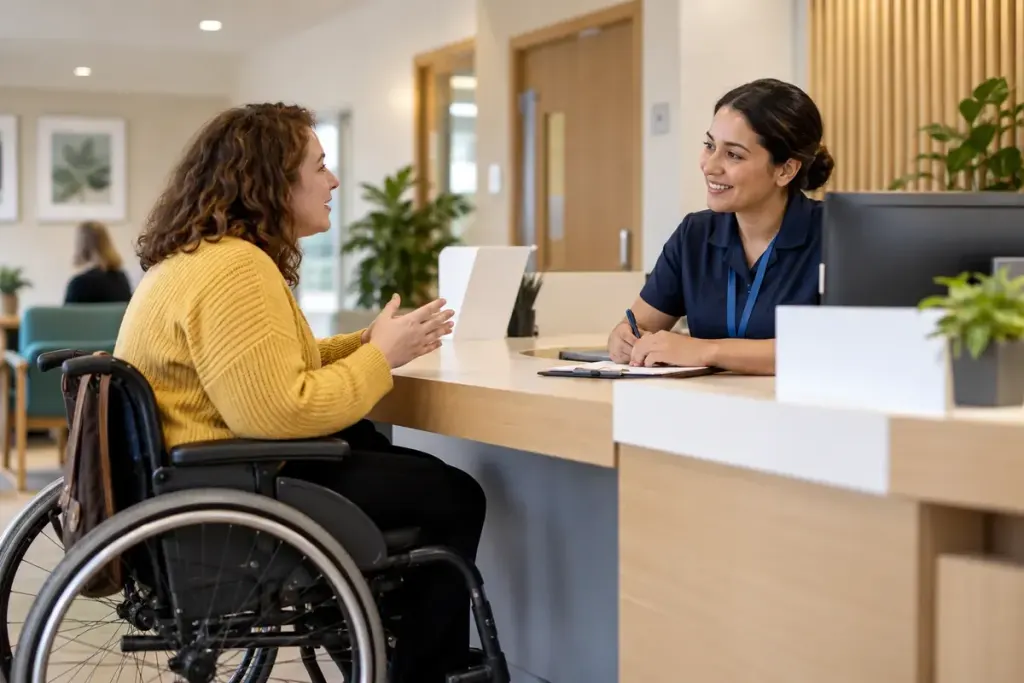
A service says its building is accessible. That is a useful beginning, but it does not tell you whether you can understand a group discussion, use the bathroom or manage the appointment format. Access is a sequence of practical requirements, not a single feature at the entrance.
Describe the activity that is difficult
You can start with the task: “I need written information before a discussion,” “I cannot use stairs,” or “I need a quieter place to hear the clinician.” Give the team enough information to plan the appointment without feeling obliged to share an unrelated personal history with every receptionist.
Ask who coordinates access arrangements and how the agreed details will reach the people providing care. A helpful phone conversation is not enough if the clinician or group facilitator never receives the note.
Walk through an ordinary visit on paper
- Arrival, entrance and movement between rooms.
- Toilet access and any waiting arrangements.
- Reading, hearing, interpreting or communicating during the session.
- Breaks, support-person arrangements and follow-up information.
For a longer programme, include meals, scheduled activities and any off-site visits. Ask about the actual arrangement rather than whether staff are “usually able to help.” If a support person is involved, clarify their role and your privacy preferences.
Where an adjustment is not immediately available, ask what alternatives the care team can offer and whether those alternatives meet the clinical purpose. Remote attendance, a different room or another appointment time may help in some situations, but none should be assumed suitable without discussing the details.
Keep a short confirmation of what was agreed, the named contact and anything still unresolved. Recheck arrangements if the venue or appointment format changes. If access problems prevent necessary care, tell the service promptly and ask about its patient-support route or an appropriate alternative provider.
The most useful outcome is an appointment you can participate in. A ramp may solve one part of the journey; the conversation should continue until the rest of that journey makes sense too.