
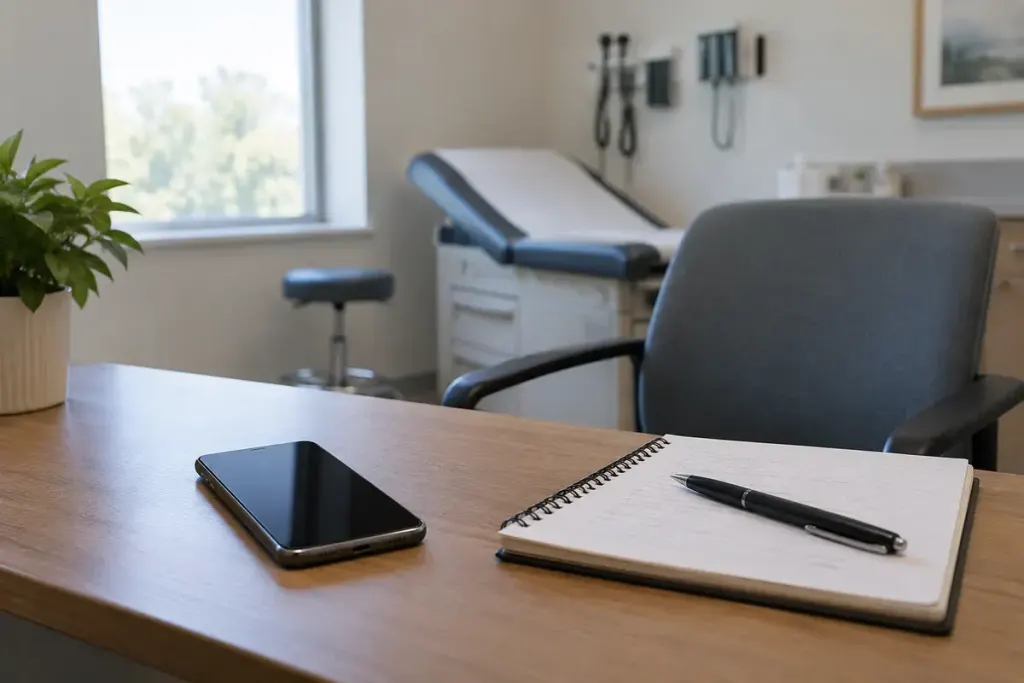
You may understand a treatment discussion in the room and struggle to recall it later. An audio recording can seem helpful, but it is worth arranging how it will be made and used before the appointment begins.
Explain the purpose plainly: “I find it difficult to remember several instructions. Could we discuss recording the explanation for my own use?” Recording rules vary by place and setting. Do not assume that a policy for a private consultation also covers group treatment, waiting rooms or other patients.
Agree what the recording includes
NHS England’s video-consultation guidance recommends telling the provider in advance and checking that they are comfortable with a patient recording. This is UK guidance, not a statement of the law everywhere.
Ask whether only the summary at the end would meet your needs. That may be easier to review than a long conversation containing sensitive details. If another person joins, explain the arrangement again. Stop if the discussion moves into information about someone else.
Think about where the file goes
- Does the recording app upload automatically to a shared account?
- Can another household member open the device or cloud folder?
- Who, if anyone, do you want to share it with?
- When will you no longer need to keep it?
A personal memory aid should not quietly become public content or input to an unfamiliar transcription service. Ask for help setting up a private method if the technology is difficult.
Before leaving, still confirm the next appointment, who to contact with questions and any agreed actions in writing. A recording does not make an unclear instruction clear. If you hear something later that seems inconsistent, contact the care team rather than changing treatment based on your own interpretation.
If recording is unsuitable, request a written summary, accessible information or permission for a trusted supporter to take notes. The aim is a plan you understand and can use.