
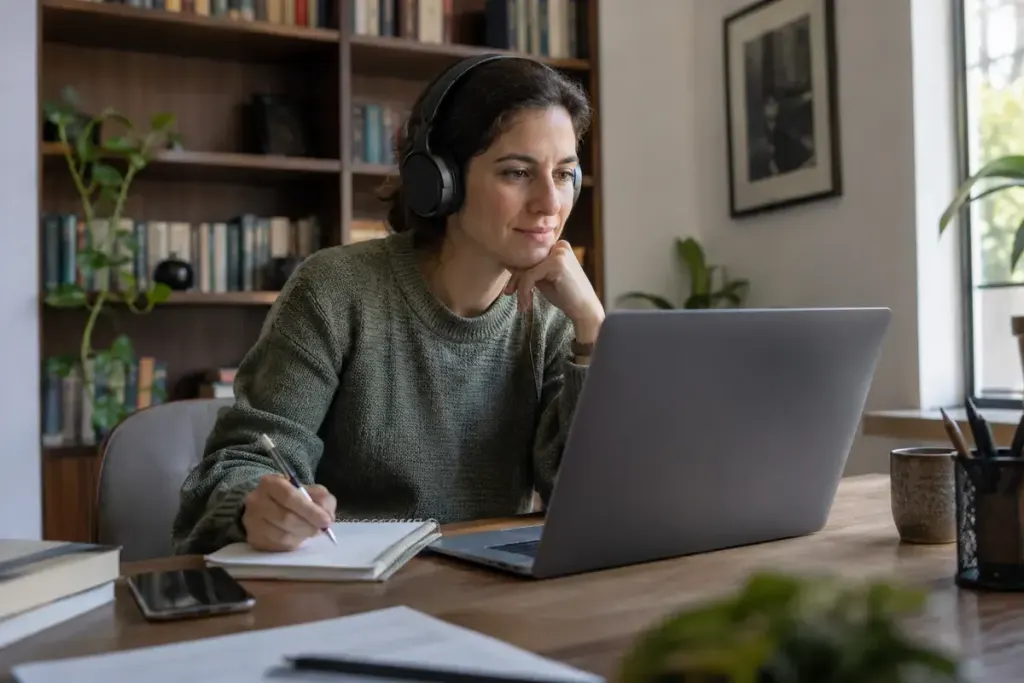
A video appointment can remove the journey to a clinic without removing every obstacle to care. If someone can overhear, the battery is nearly empty or the link will not open, it may be difficult to talk honestly. Preparation should protect the conversation, not simply get the camera working.
Start with privacy you can actually use
Choose a place where you can speak without being interrupted. Headphones can keep the clinician’s voice private, but they do not stop others hearing yours. Tell the service beforehand if you cannot find a suitable space; ask about an alternative appointment arrangement rather than pretending the situation is comfortable.
US HHS guidance on behavioral-health privacy discusses private locations, headphones and agreeing who else will be present. If a support person or interpreter is joining, establish what you want them to hear and when you would prefer to speak alone.
Agree what happens if the call fails
Use the service’s verified appointment instructions. Test the microphone, charge the device and close unrelated notifications. Ask which number to call if the connection drops, whether the clinician will call you back and how long to wait. Keep those instructions somewhere you can reach without the video screen.
A useful rehearsal is simply opening the approved link and checking the required software before the day. Do not send medical details to an unfamiliar address because a message appears to offer technical help. Contact the clinic through a known route if the invitation looks wrong.
Leave room for clinical decisions
Have your current medication information and main questions available. The clinician may need to confirm your location and discuss emergency arrangements. Ask what requires an in-person assessment; a video visit is not suitable for every symptom, treatment or stage of care.
If you become acutely unwell, seek urgent local medical help rather than waiting for a scheduled screen appointment. For the ordinary visit, finish by confirming the next step and how to contact the team. The goal is a usable care conversation, not a technically perfect performance.